.png)
A compliant high-risk payment stack pairs a vertical-specialized acquiring relationship with a flexible gateway, a subscription billing engine, fraud controls tuned to your product category, and active chargeback mitigation. That’s the whole formula. The regulated industry software payment examples that actually work in nutraceuticals, telehealth, and CBD all share this same backbone, even when the specific vendors differ.
Expect to pay 3.5% to 8% in processing fees as a high-risk merchant, compared with 1.5% to 3% for standard retail accounts. Nutraceutical subscription brands typically see chargeback rates driven mostly by “I forgot I signed up” disputes. Visa and Mastercard interchange sits underneath all of this as a fixed cost no processor can negotiate away.
Before you shop for a provider, run this quick verdict check:
- Audit your stack today: do you have a named merchant account, a gateway that supports tokenization, and a documented chargeback process?
- Ask any provider these three questions first: How many acquiring banks do you have in my vertical? Is pricing interchange-plus or tiered? What triggers a reserve step-down?
- Next step: if you’re missing any of the above, start an underwriting conversation with a specialist like DavinciPay before you scale ad spend into a fragile payment setup.
Key Takeaways
A compliant high-risk payment stack requires vertical-specialized acquiring, flexible gateway tokenization, subscription billing tools, and active chargeback mitigation working together, not in isolation.
| Point | Details |
|---|---|
| Budget for real fee ranges | High-risk processing runs 3.5%–8%, well above the 1.5%–3% standard merchant range. |
| Match architecture to vertical | Nutraceutical, telehealth, and CBD stacks each need distinct compliance layers and underwriting documents. |
| Demand written reserve terms | Insist on interchange-plus pricing and documented step-down criteria before signing. |
| Plan for multi-state complexity | Geolocation gating and multi-acquirer routing handle state and international variation. |
| Start with a specialist | DavinciPay offers vertical underwriting and multi-acquirer orchestration built for regulated merchants ready to apply. |
Table of Contents
- What Components Make Up a Regulated Payment Stack?
- What Do Real Payment Architectures Look Like By Vertical?
- What Will This Actually Cost and How Long Does Onboarding Take?
- How Do You Choose a Provider and Spot Red Flags?
- What Compliance Rules Affect Payment Processing In Each Vertical?
- How Do You Handle Multi-State and International Sales?
- Why Do Vertical Specialists Outperform Generalist Processors?
- Ready to Build a Payment Stack That Doesn’t Break Under Scale?
- Frequently Asked Questions
- Sources
What Components Make Up a Regulated Payment Stack?
Every regulated or high-risk merchant needs the same nine building blocks, even if the vendors handling them differ by vertical. Skipping one doesn’t save money. It just moves the cost to a chargeback fee, a frozen reserve, or a terminated account six months from now.
- Acquiring/merchant account: the bank relationship that actually moves funds; this is where vertical specialization matters most.
- Payment gateway: the software layer that captures card data and routes it securely.
- Processor routing: decides which acquirer handles a given transaction, especially in multi-acquirer setups.
- Subscription/billing engine: manages recurring charges, trial conversions, and dunning logic.
- Tokenization and stored-credential handling: removes raw card data from your servers and reduces PCI scope.
- Fraud prevention: 3D Secure, device fingerprinting, and velocity rules calibrated to your product.
- Chargeback prevention and representment tools: automated evidence submission and dispute alerts.
- Multi-acquirer orchestration: spreads volume across banks so one frozen account doesn’t kill your revenue.
- Compliance controls: HIPAA-aware data flows, age gates, and clear statement descriptors.
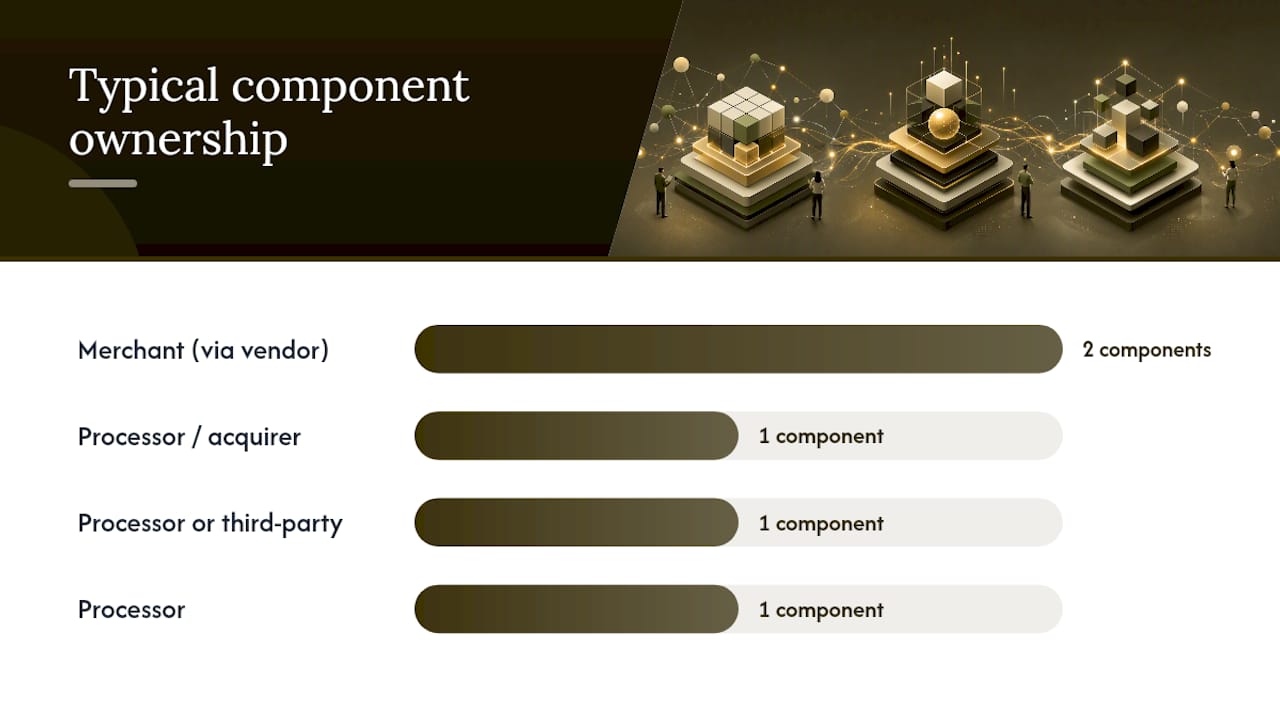
| Component | Typically owned by | Must-have feature | Why it matters for regulated verticals |
|---|---|---|---|
| Merchant account | Processor/acquirer | Vertical underwriting experience | Generic banks decline or freeze regulated categories fast |
| Gateway | Merchant (via vendor) | Tokenization support | Reduces PCI burden and enables retry logic |
| Billing engine | Merchant (via vendor) | Smart retry and dunning | Cuts recurring “forgot I subscribed” disputes |
| Fraud tools | Processor or third-party | 3DS and velocity rules | Regulated products attract more targeted fraud attempts |
| Chargeback tools | Processor | Automated representment | Protects account standing with card networks |
Pro Tip: Place tokenization at the gateway level, not inside your subscription platform. That way, when a card fails and your billing engine retries, it’s pulling a token instead of raw card data. It shrinks your PCI footprint and keeps recurring revenue intact even during a processor migration.
What Do Real Payment Architectures Look Like By Vertical?
Abstract advice doesn’t help when you’re staring at an integration diagram. Here are three concrete templates built from patterns that actually show up in regulated ecommerce.
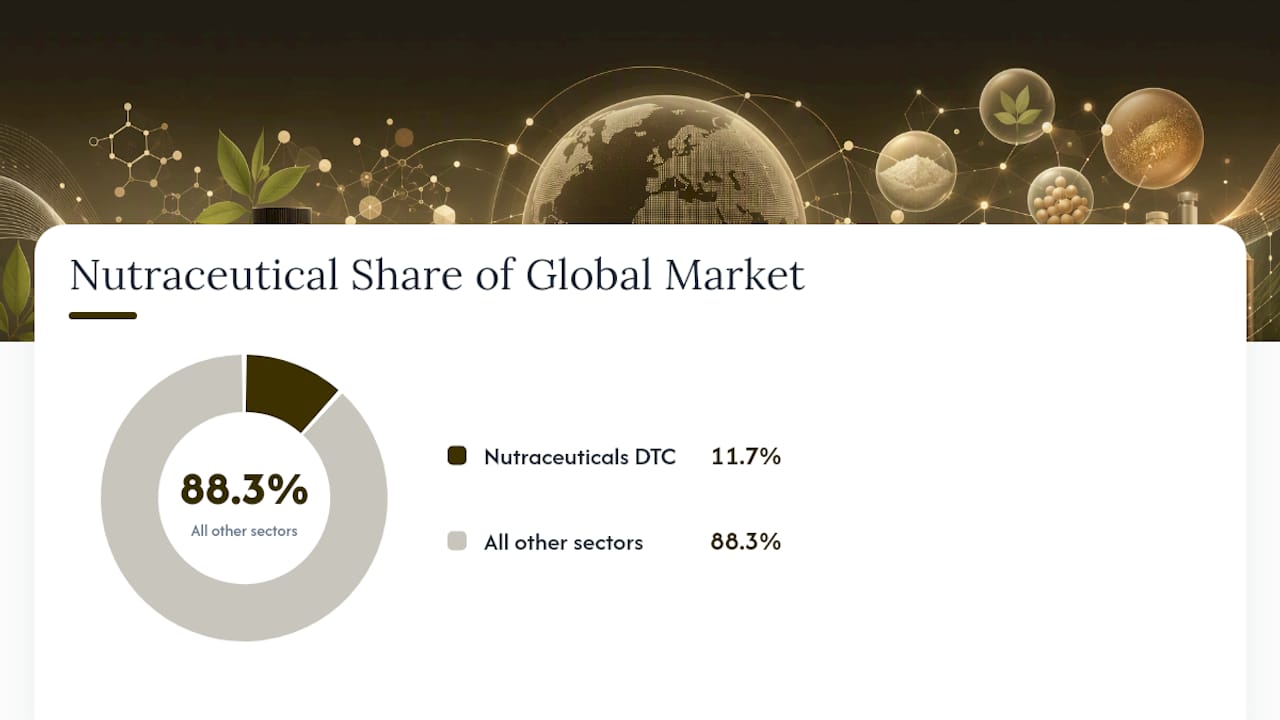
Nutraceutical subscription DTC. Acquiring runs through a high-risk specialist with multi-bank coverage. The gateway handles tokenization and passes stored credentials to a billing engine running smart retries and dunning sequences. Fraud tools flag velocity spikes tied to “buy one get a free trial” promotions, a common abuse vector. Underwriting will want your refund policy, sample marketing claims, and fulfillment geography documented up front, since nutraceutical e-commerce now represents roughly $68 billion within a $580 billion global market, and subscription billing dominates that channel.
Telehealth recurring billing. Here the architecture adds a HIPAA-aware data layer between your patient intake system and your billing engine, keeping protected health information separate from payment data. Stored-consent capture and separate cancellation logs matter enormously for representment when a patient disputes a recurring prescription charge. Underwriting typically requests prescriber relationships, licensing documentation, and clear telemedicine consent flows.
CBD/age-gated storefront. Acquiring coverage needs to be broader here since fewer banks accept the category at all. Age verification sits at checkout, before payment capture, and statement descriptors need careful wording to avoid confusing cardholders (a leading cause of “fraud” disputes that are really just recognition failures).
Integration requirements vary by case, but a few show up everywhere:
- Multi-acquirer coverage so one bank’s risk appetite shift doesn’t shut you down.
- 3DS/SCA support for card-not-present authentication on higher-ticket recurring charges.
- HIPAA-aware routing specifically for telehealth, separate from general PCI compliance.
- Documented age verification flow for CBD and other age-gated categories.
What Will This Actually Cost and How Long Does Onboarding Take?
High-risk merchants generally pay 3.5% to 8% in processing fees, against 1.5% to 3% for standard retail accounts, and transaction fees for legitimate high-risk accounts can also run 2.5% to 6% depending on chargeback history and volume.
Budget for more than the headline processing rate. Build your cost model around these line items:
- Setup fee (often waived for larger volume commitments).
- Monthly gateway and platform fees.
- Per-transaction fees on top of your blended rate.
- Reserve funding, typically 5% to 15% held on a rolling or fixed schedule.
- Chargeback fees per dispute, separate from your processing rate.
- Chargeback mitigation service fees if you use dedicated representment tools.
- Early termination fees buried in the contract’s fine print.
Fast-track placements for clean, well-documented merchants can close in days. Typical underwriting runs 2 to 6 weeks. Claims-heavy products, international settlement needs, and complex KYC/KYB documentation all push timelines toward the longer end.
How Do You Choose a Provider and Spot Red Flags?
Processors who specialize in your vertical provide sharper underwriting, better bank relationships, and fewer surprise reserve actions than generalists chasing volume across unrelated categories. Run every prospective provider through this checklist:
- Vertical specialization with verifiable client references in your exact category.
- Multiple acquiring bank relationships, ideally three or more for your vertical.
- Explicit interchange-plus pricing rather than opaque tiered structures.
- A written reserve policy with clear step-down criteria.
- Chargeback management integrations like Ethoca and Verifi.
- Multi-currency and multiple payment-method coverage if you sell beyond one region.
Ask these questions directly on your underwriting call:
- What are the exact reserve terms, and what triggers a reduction?
- What chargeback ratio triggers a warning versus an account review?
- How do you manage statement descriptors and refund timing?
- What’s your SLA on releasing held funds?
- Is your pricing interchange-plus or tiered?
Watch for these warning signs before you sign anything: single-bank dependency, refusal to put reserve terms in writing, opaque tiered pricing quotes, aggressive early termination fees, and an inability to produce even one verifiable reference in your vertical.
What Compliance Rules Affect Payment Processing In Each Vertical?
Compliance requirements shape your payment architecture just as much as your product does. Telehealth merchants operate under HIPAA, which means payment data and protected health information need to stay on separate rails, even when they touch the same checkout flow. Your gateway should never store diagnosis codes or treatment notes alongside card data, and your billing engine needs clear consent capture that documents when a patient agreed to recurring charges.
Nutraceutical and supplement merchants answer to a different authority. The FDA doesn’t regulate payment processing directly, but marketing claims on your product pages get scrutinized during underwriting because overstated health claims correlate strongly with chargebacks and regulatory action. Processors will ask to review your landing pages, your trial disclosures, and your refund policy before approval, since detailed vertical-specific documentation is standard practice for accelerated underwriting.
CBD merchants face a patchwork problem. Legality varies by state and by the exact cannabinoid content of your product, which means your acquiring bank needs a documented view of where your product is legal to sell before it will process a single transaction. Age verification isn’t optional here; it’s a compliance control your gateway needs to enforce before checkout, not after.
None of these requirements are exotic. They just need to be built into your stack from day one instead of retrofitted after your first compliance flag.
How Do You Handle Multi-State and International Sales?
Selling across state lines inside the US mostly means tracking product legality rather than sales tax alone. CBD and certain nutraceutical ingredients are legal in some states and restricted in others, so your checkout flow may need geolocation-based product gating before a customer can even complete an order. Telehealth compounds this: prescriber licensing is state-specific, and a provider licensed in one state generally can’t legally prescribe to a patient physically located in another.
International sales add currency and settlement complexity on top of the compliance layer. You’ll need multi-currency support at the gateway level and a processor with international acquiring relationships, not just domestic ones. Cross-border transactions also draw more fraud scrutiny from card networks, which means your 3DS and velocity rules typically need tighter thresholds for international orders. Reducing AML and compliance risk in cross-border money movement requires the same discipline you’d apply to KYC on new merchant accounts, just applied to transaction-level flows instead.
The practical fix is orchestration: route domestic transactions through your primary acquirer and international volume through a second relationship built for cross-border settlement. Trying to force every region through one acquiring bank is usually what triggers unexpected holds when volume shifts geographically.
Why Do Vertical Specialists Outperform Generalist Processors?
Generalist processors underwrite by category checklist. Specialists underwrite by pattern recognition, because they’ve seen a thousand accounts like yours succeed or fail. That difference shows up in reserve policies, in how fast a frozen account gets unlocked, and in whether chargeback tooling is built into onboarding or bolted on after your first dispute spike.
A generalist processor can work fine at very low volume with a genuinely low-risk product. Once you’re running recurring billing at scale in a regulated category, the math changes: hidden reserve terms and single-bank dependency get expensive fast.
Ready to Build a Payment Stack That Doesn’t Break Under Scale?
Every architecture in this guide, from the nutraceutical subscription template to the telehealth recurring billing setup, maps directly to what DavinciPay builds for regulated merchants. Vertical underwriting means your application gets reviewed by people who already understand chargeback patterns in your category, not a generalist checklist. Multi-acquirer orchestration keeps one bank’s risk appetite from taking down your entire revenue stream, while native subscription tooling and tokenization protect recurring charges from the retry logic all the way through to representment.

If your current setup is running on a single acquiring bank or you’re still fielding chargebacks manually, that’s the gap worth closing before your next growth push. Apply now with DavinciPay to get a tailored placement estimate and a realistic onboarding timeline for your specific vertical, whether that’s nutraceuticals or telehealth.
Frequently Asked Questions
What are the best regulated industry software payment examples for a subscription business? The strongest examples pair a specialist merchant account with a subscription billing engine that handles smart retries and tokenized recurring charges. Nutraceutical and telehealth subscription models both depend on this combination to keep chargeback rates manageable.
How much more do high-risk merchants pay for processing? Expect 3.5% to 8%, compared with 1.5% to 3% for standard retail, with the exact rate depending on your vertical, chargeback history, and volume.
How long does underwriting take for a regulated merchant account? Clean, well-documented applications can close in days. Typical underwriting runs 2 to 6 weeks, with longer timelines for international settlement or complex licensing documentation.
Do I need a HIPAA-aware payment setup for telehealth? Yes. Payment data and protected health information need separate handling, even when they touch the same checkout, and your billing engine needs documented consent capture for recurring charges.
What’s the single biggest red flag when evaluating a high-risk processor? Single-bank dependency. If a processor can’t name multiple acquiring relationships for your vertical, one bank’s policy shift can freeze your entire revenue stream overnight.
This article is general information, not a substitute for advice from a qualified financial advisor. Consult a qualified financial professional about your own circumstances before acting on anything here.
Sources
- Choosing a High-Risk Payment Processor in 2026: The Complete Buyer’s Guide - Quantm Media
- High-Risk Payment Processing Companies: How to Choose the Right Provider | iFin
Merchants planning settlement and reconciliation workflows may also find value in payment institution accounting solutions built for compliance-heavy environments.


.webp)
