.png)
A payment risk management platform automates real-time fraud prevention, merchant underwriting, AML/KYC monitoring, and dispute handling so high-risk ecommerce merchants approve more good customers while blocking sophisticated abuse before funds move.
Every high-risk merchant needs these core capabilities in place:
- Real-time transaction screening with sub-200ms decisioning
- Merchant underwriting and onboarding automation to reduce manual review queues
- Automated case and chargeback management with audit-grade decision logs
- Data enrichment signals including device fingerprinting, behavioral biometrics, and IP intelligence
- AML/KYC workflows that satisfy PCI DSS and regulatory audit requirements
Davincipay works with merchants across telehealth, nutraceuticals, supplements, and subscription ecommerce who need exactly this infrastructure, built for their risk profile.
Table of Contents
- What do payment risk management platforms actually do for your business?
- Which features should you require from any risk platform vendor?
- How do you evaluate and choose the right risk platform?
- What does implementation actually look like, and what will it cost?
- What KPIs should you track to measure platform performance?
- When does Davincipay make sense as your risk management partner?
- Key Takeaways
- What most merchants get wrong when deploying RiskOps
- Davincipay gets high-risk merchants processing faster
What do payment risk management platforms actually do for your business?
These platforms handle the full transaction lifecycle, from real-time screening and decisioning at checkout through post-transaction case resolution, replacing manual investigation queues with AI-powered workflows.
Here is what changes operationally when you deploy one:
- Real-time screening and decisioning: Every transaction is evaluated against rules, velocity checks, and enrichment signals in milliseconds. Decisions to approve, review, or block happen before funds move.
- Merchant underwriting and onboarding: Automated risk profiling replaces manual document reviews. Unified onboarding and monitoring cut the time to activate new merchants from weeks to days.
- Automated case and chargeback management: Alerts auto-assign to analysts with AI-generated summaries. Routine cases resolve without human touch.
- AML/KYC transaction monitoring: Continuous screening against sanctions lists and behavioral thresholds keeps your compliance posture defensible.
- Enrichment signals: Device fingerprinting, behavioral biometrics, and IP intelligence build a holistic identity profile for every transaction, catching synthetic fraud and account takeover that address rules miss entirely.
Decision latency matters more than most merchants realize. Platforms with high latency add friction at checkout. Aim for very low latency for card-present and card-not-present flows. SLA commitments on throughput and uptime directly affect your approval rate and revenue.
Pro Tip: Before enforcing any new rule, run it in shadow mode first. Shadow mode compares system recommendations against real outcomes without blocking customers, so you tune thresholds against actual chargebacks before going live.

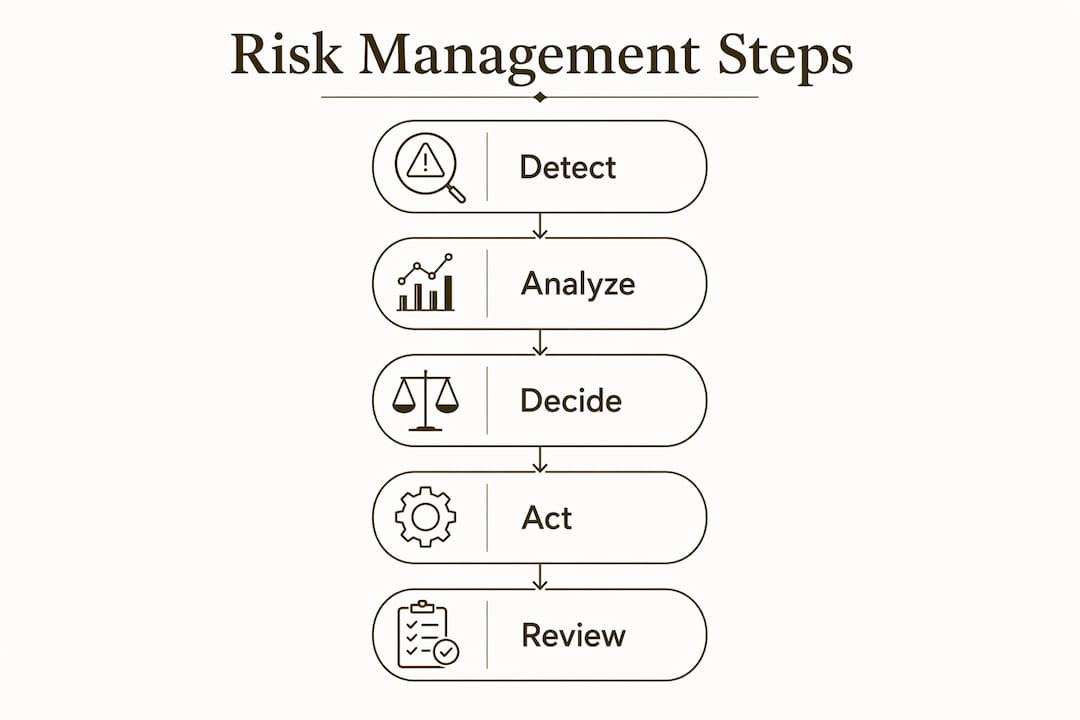
Which features should you require from any risk platform vendor?
For high-risk merchants, these capabilities are non-negotiable. Use this list in RFPs and vendor demos.
- Real-time screening with sub-200ms decision latency
- Merchant underwriting and onboarding automation
- AML/KYC screening with consortium and shared intelligence feeds
- Data enrichment covering device fingerprinting, behavioral biometrics, and IP intelligence
- Flexible rules engine with agentic automation (auto-pause payouts, auto-route cases)
- Audit-grade decision logs with exportable records
- Open APIs, SDKs, and a sandbox environment
- Shadow/pilot mode for safe rule testing
- Throughput SLAs and uptime monitoring
- Case management with auto-assignment and AI summaries
| Feature | What It Prevents | Internal Owner | Minimum Acceptance Criterion |
|---|---|---|---|
| Real-time decisioning | Fraud losses, false declines | Payments Ops | Decision latency < 200ms |
| Merchant underwriting | Portfolio risk exposure | Risk / Compliance | Automated scoring with manual override |
| AML/KYC screening | Regulatory fines, account abuse | Compliance | Exportable audit logs, sanctions coverage |
| Data enrichment | Synthetic ID, account takeover | Engineering / Risk | Device + behavioral + IP signals combined |
| Agentic automation | Analyst burnout, slow resolution | Risk Ops | Auto-resolve routine alerts without human touch |
| Audit-grade decision logs | Regulatory exposure, disputes | Compliance | Full record exportable per transaction |
| Sandbox / shadow mode | Conversion damage from bad rules | Engineering | Shadow mode available pre-enforcement |
Pro Tip: Require open data pipelines and exportable decision records before signing any contract. Closed data layers create vendor lock-in that is expensive to unwind and leaves you without the audit evidence regulators expect.
How do you evaluate and choose the right risk platform?
Operational fit with your RiskOps team and data portability are the two criteria that separate good vendors from costly mistakes. Technical specs matter, but a platform your team cannot operate or exit is a liability.
Technical criteria:
- Decision latency and throughput SLAs under load
- API and SDK quality, plus webhook reliability
- Model explainability: can analysts see which signals drove each decision?
- Sandbox environment availability before contract signing
Operational criteria:
- Managed services vs. self-serve configuration options
- Shadow mode and pilot testing support
- Case management workflow customization
- Support response times and training resources
Business criteria:
- Pricing model fit: per-decision vs. subscription with usage tiers
- AML/KYC and PCI DSS compliance coverage for your verticals
- Chargeback mitigation tools and dispute workflow support
- Contract flexibility and data export rights
Questions to ask in every vendor demo:
- Can you run a model in shadow mode before enforcement?
- Can we export a full decision record for a sample transaction right now?
- What is your average decision latency and your SLA under peak load?
- How do your agents handle auto-pausing payouts or routing cases?
- What happens to our data if we terminate the contract?
- How often do you retrain models, and can we trigger retraining on our labeled data?
Red flags to walk away from:
- Opaque scoring with no signal explainability
- Closed data layer with no export capability
- No sandbox or shadow mode available pre-launch
- Missing audit logs or incomplete decision records
- Vendor unwillingness to demonstrate shadow testing live
What does implementation actually look like, and what will it cost?
Expect a phased rollout spanning several weeks from contract to full enforcement, depending on integration complexity and your existing data infrastructure.
Typical phases and timelines:
- Discovery and onboarding (weeks 1–2): Map your transaction flows, data sources, and compliance requirements. Identify internal stakeholders across engineering, payments ops, and compliance.
- Data mapping and integration (weeks 2–5): Connect APIs, configure webhooks, and pipe enrichment signals. Custom integrations for legacy gateways add time here.
- Shadow/pilot testing (weeks 5–8): Run rules in shadow mode. Compare recommendations against real chargebacks and disputes. Tune thresholds before any enforcement.
- Tuning and workflow configuration (weeks 8–10): Finalize case routing, auto-assignment rules, and analyst dashboards.
- Enforcement and scale (weeks 10–14): Enable hard actions. Monitor SLAs, approval rates, and fraud loss daily.
| Pricing Model | Best Fit | Key Cost Driver |
|---|---|---|
| Per-decision | High-volume, variable transaction counts | Transaction volume spikes |
| Per-merchant | Platforms managing merchant portfolios | Merchant count growth |
| Subscription + usage tiers | Predictable volume with growth headroom | Tier overage fees |
| Managed services add-on | Teams without dedicated risk analysts | Analyst hours billed separately |
Internal stakeholders you need aligned from day one: engineering (API integration), payments ops (rule configuration), compliance (AML/KYC sign-off), and customer service (dispute workflow training).
What KPIs should you track to measure platform performance?
Net approved volume, kept within your chargeback and fraud loss targets, is the primary KPI. Everything else supports or explains it.
Track these metrics and require them in your vendor dashboard:
- Fraud rate: Confirmed fraud losses as a percentage of total transaction volume. Measures platform effectiveness directly.
- False positive rate: Legitimate transactions blocked or flagged. High false positives kill conversion and damage customer trust.
- Approval/conversion lift: Change in approved transaction rate after deployment. Quantifies revenue impact.
- Chargeback rate and chargeback-to-transaction ratio: Your card network thresholds define the ceiling. Staying below 1% (Visa/Mastercard standard) keeps your processing relationships intact.
- Dispute resolution time: Average hours from dispute open to resolution. Faster resolution lowers operational cost.
- Cost per decision: Total platform cost divided by decisions processed. Benchmarks efficiency over time.
- SLA adherence: Decision latency and uptime vs. contracted SLAs. Non-adherence directly affects checkout conversion.
| KPI | Target for High-Risk Merchants | Reporting Cadence |
|---|---|---|
| Fraud rate | — | Daily |
| False positive rate | < 2% of screened transactions | Daily |
| Chargeback rate | < 1% (card network threshold) | Weekly |
| Approval/conversion lift | Positive vs. pre-deployment baseline | Weekly |
| Dispute resolution time | — | Weekly |
| Decision latency SLA | sub-200ms, uptime SLAs | Daily |
| Cost per decision | Benchmarked against prior period | Monthly |
Require dashboards that show rule outcomes, signal impact (which signals drove which decisions), and cohort analysis to help reveal evolving attack patterns before they become evident in aggregate fraud rates.
When does Davincipay make sense as your risk management partner?
Davincipay is the right fit when you need specialized acquiring, underwriting support, and integrated fraud mitigation in one place, without assembling three separate vendors to cover what a high-risk merchant actually requires.
Key advantages Davincipay brings to high-risk merchants:
- Tailored acquiring and underwriting for verticals that standard processors decline: telehealth, nutraceuticals, supplements, and subscription ecommerce
- Integrated fraud tools and chargeback mitigation built into the merchant services layer, not bolted on separately
- Industry-specific onboarding that accounts for the compliance requirements of regulated and high-growth verticals
- Domestic and international acquiring relationships that give you processing continuity when a single bank relationship fails
- Sandbox and integration support so your engineering team can validate the setup before going live
Davincipay also helps configure rules and workflows during onboarding, which shortens the shadow-testing phase significantly for merchants who lack a dedicated risk analyst.
Pro Tip: Use Davincipay’s onboarding process to run your first shadow-mode test against real transaction data. You get a baseline fraud rate and false positive rate before enforcement, which makes your first compliance review far easier to defend.
Apply now or book a technical conversation to start your underwriting review.
Key Takeaways
High-risk merchants who require real-time decisioning, audit-grade logs, and integrated acquiring need a platform built for their risk profile, not a generic fraud tool adapted after the fact.
| Point | Details |
|---|---|
| Shadow mode before enforcement | Always test new rules in shadow mode to protect conversion while tuning thresholds against real chargebacks. |
| Data enrichment is non-negotiable | Require device fingerprinting, behavioral biometrics, and IP intelligence to catch synthetic fraud that static rules miss. |
| Validate integration in a sandbox | Confirm decision latency, API reliability, and audit log export before signing any vendor contract. |
| Measure conversion and fraud together | Track approval lift alongside fraud rate and chargeback ratio; optimizing one without the other produces incomplete results. |
| Davincipay for high-risk verticals | Davincipay combines specialized acquiring, underwriting, and integrated fraud tools for telehealth, nutraceutical, supplement, and subscription merchants. |
What most merchants get wrong when deploying RiskOps
The conventional wisdom says pick the platform with the best fraud detection rate and deploy it. That framing misses the real failure mode: most high-risk merchants underinvest in the operational layer around the platform, then wonder why performance degrades six months after launch.
Three things practitioners see consistently. First, cross-team SLAs are almost always missing. Engineering, payments ops, and compliance each have different definitions of “working,” and without a shared SLA, rule drift goes undetected until chargebacks spike. Second, agentic automation is underused. Small compliance teams that auto-resolve routine alerts with agent-based logic handle three to four times the case volume of teams that route everything to human review. The efficiency gap is real and compounds quickly. Third, model revalidation gets skipped. Fraud tactics evolve faster than annual review cycles. Quarterly rule and signal reviews, with both payments and product teams in the room, catch drift before it becomes a loss event.
A subscription merchant running a shadow-mode pilot, measuring recommended blocks against actual chargebacks, often finds that a portion of their manual review queue was unnecessary friction on legitimate customers. That finding alone justifies the platform investment. The merchants who sustain performance are the ones who treat the platform as a living system, not a one-time deployment.
Davincipay gets high-risk merchants processing faster
High-risk merchants spend too long assembling acquiring, underwriting, and fraud tools from separate vendors. Davincipay delivers all three in one place, with onboarding built for telehealth, nutraceutical, supplement, and subscription businesses that standard processors turn away.

Getting started is straightforward:
- Apply for underwriting review and get a fast decision on your merchant account
- Book a technical demo to see sandbox access, integration options, and rule configuration in action
- Request sandbox access to validate your integration and run shadow-mode testing before going live
Start your application and get your underwriting review underway. Davincipay’s team handles the setup, configures your fraud rules, and stays available through your first enforcement cycle so you are not managing this alone.


.webp)
