A processor holds your funds when it sees more risk than your account was priced for. The usual triggers are chargeback or fraud ratios near card-network limits, a sudden jump in volume or ticket size, activity that does not match your application, thin processing history, and compliance gaps. Most holds can be prevented. Many can be shortened. Here is how to tell which one you are facing.
This guide is for ecommerce, subscription, telehealth, and supplement merchants. If you searched this phrase after reading about frozen federal grants, that is a different topic: those pauses come from lapses in appropriations, covered by a Congressional Research Service overview of past shutdowns. The rest of this page is about card payments.
TL;DR
- Holds come from risk signals: disputes, fraud, volume spikes, unusual activity, missing documents, or a short track record.
- A rolling reserve withholds a percentage of each day’s sales. A holdback or fixed reserve is usually a set amount held. Terms vary by contract, so read yours.
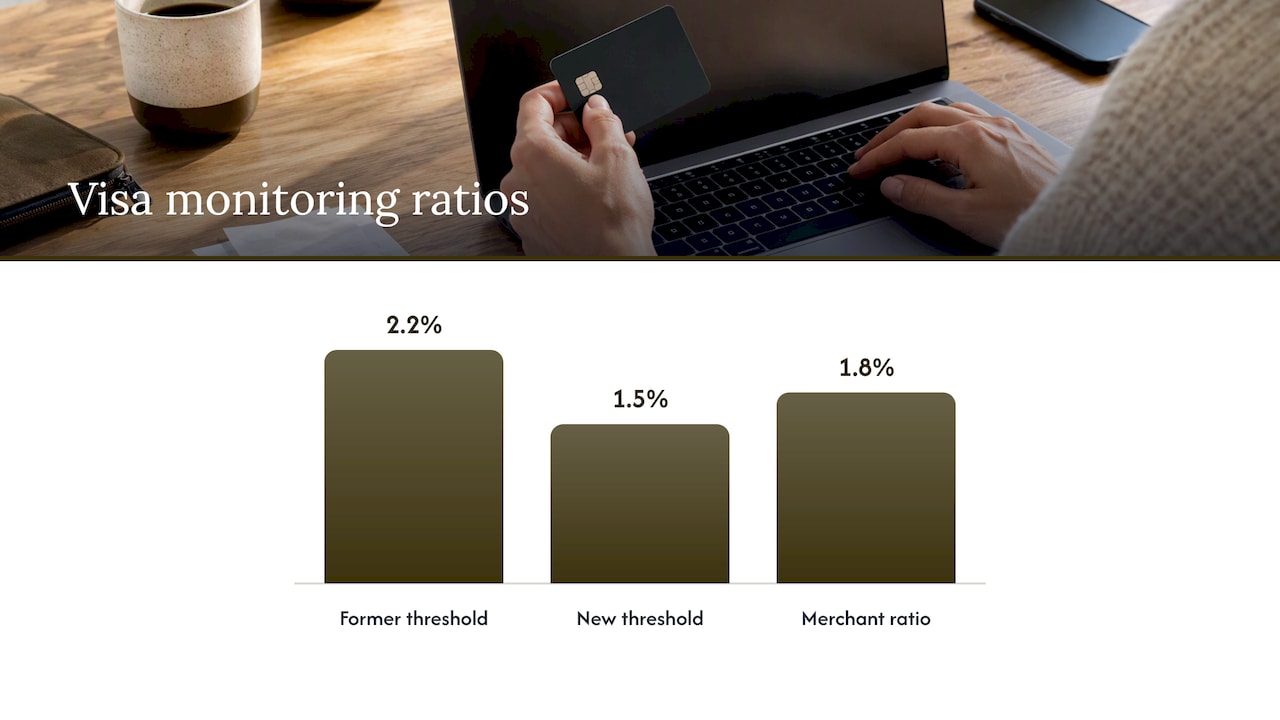
- Visa’s merchant threshold under its monitoring program tightened to 1.5% on April 1, 2026. Dispute control matters more than before.
- Reserve terms are negotiable over time. Clean history, low disputes, and documentation are your leverage.
- Keep a cash buffer and a backup processing relationship. A hold can arrive before you get an explanation.
Table of Contents
- What a funding hold is
- The most common funding hold reasons
- Rolling reserve vs. holdback
- What processors look at when they set or lower a reserve
- What to do when a hold lands
- How to prevent holds before they start
- Our perspective
- Getting approved with reserves you can plan around
- FAQ
- Sources
What a funding hold is
A funding hold is any delay or withholding of money your processor owes you from card sales. It is different from normal settlement timing. Standard payouts take a set number of business days. A hold means the processor stops, slows, or reduces a payout for a reason tied to risk.
Holds fall into three groups:
- Transaction-level holds. A single payment or batch is flagged and reviewed before release.
- Account-level holds. Payouts stop while the processor reviews your account.
- Reserves. A planned, contractual withholding, either a percentage of sales or a fixed sum.
The first two are reactions. The third is a term you agree to at underwriting. Knowing which you have decides what you do next.
The most common funding hold reasons
1. Chargeback and fraud ratios near program limits
This is the leading cause. Card networks run monitoring programs, and when a merchant’s ratios climb, processors act to protect themselves. According to SHOPLINE’s help center on chargeback and fraud monitoring, merchants in a monitoring program may face penalties, extra fees, or loss of eligibility until ratios drop.
Visa’s change matters here. Under its acquirer monitoring program, the merchant “Excessive” threshold moved from 2.2% to 1.5% on April 1, 2026, per the Merchant Risk Council. A merchant who was comfortable at 1.8% last year is not comfortable now. Processors tend to tighten reserves well before a merchant reaches the line.
2. Sudden volume or ticket-size spikes
Your application states expected monthly volume and average ticket. A flash sale, a successful influencer push, or a new product line can push you far past both. The processor sees activity it did not underwrite and may pause payouts until it confirms the sales are real and the product ships.
3. Activity that does not match the application
Selling products or services outside your approved description is a fast route to a hold. Common examples: a supplement brand adding a product with new health claims, a telehealth company adding a new service line, or a merchant routing a second website through one account. Update your processor before you launch, not after.
4. Thin or no processing history
New merchants and merchants moving from another processor have little record for underwriters to rely on. Without history, the processor prices uncertainty. That often means a reserve, slower payouts, or a lower volume cap at first. Prior processing statements are the proof that lowers that uncertainty.
5. Delivery lag and subscription exposure
The longer the gap between payment and delivery, the longer the window in which a customer can dispute. Pre-orders, annual plans, and long trial-to-bill subscriptions carry more exposure. Subscription merchants also face disputes from customers who forgot a renewal. Clear billing descriptors, reminder emails, and easy cancellation reduce that exposure.
6. Missing documents and compliance gaps
Expired licenses, unverified ownership information, an unclear refund policy, a website missing required disclosures, or no age verification where required can all stall funds. Regulated verticals get more scrutiny here. Telehealth and supplement merchants should expect requests for licensing, product, and claims documentation.
7. Fraud signals and card testing
A burst of small declined transactions, many cards from one device, or mismatched billing and shipping patterns can trigger an automatic hold. Card-testing attacks are the classic case. Real-time monitoring and velocity limits catch these before the processor does.
8. Account termination
When a processor closes an account, it usually keeps funds to cover refunds and disputes that may still arrive. An IRS Chief Counsel memo on merchant agreements notes that these contracts can allow a processor to hold reserve or charge-back funds for a period after termination, and cites periods that run as long as 270 days. Check the termination clause in your own agreement.
Rolling reserve vs. holdback
People use these words loosely, and processors name them differently. Read the contract language rather than the label. In general:
| Feature | Rolling reserve | Fixed or upfront reserve | Holdback on specific payouts |
|---|---|---|---|
| How it works | A percentage of each day’s sales is withheld | A set sum is funded once or in installments | A flagged payout is delayed pending review |
| Release | Each slice is released after a set number of days | Released at a date or when a target is met | Released when the review clears |
| Best for | Ongoing dispute exposure | Newer merchants or large exposure | Short-term anomalies |
| Cash-flow effect | Steady, predictable drag | One large hit up front | Unpredictable, but short |
Here is a worked example with made-up numbers. Say a reserve is 10% of sales with a 180-day release window. You process $100,000 a month. Each month, $10,000 is withheld. After six months, about $60,000 sits in reserve. From month seven on, the oldest $10,000 is released as the newest is withheld, so the balance holds near $60,000 while your volume stays flat. The reserve is not a one-time cost. It is working capital you must plan for.
The reserve is also not fully yours to use in the meantime. The same IRS memo explains that processors treat reserve accounts as security against losses, and agreements can let them offset those losses from it.
What processors look at when they set or lower a reserve
If you want lower merchant reserves, you need to show what underwriters measure. They typically weigh:
- Chargeback ratio over several months, not one good month.
- Refund rate and reasons.
- Months of processing history, shown through statements.
- Fulfillment proof: tracking, delivery confirmation, service logs.
- Business model risk: recurring billing, trial offers, long delivery windows.
- Compliance posture: licensing, age verification, claims review, clear terms.
- Financial strength of the owners and the business.
Processing history requirements
There is no single industry-wide number. Each acquiring bank sets its own standard. What most want to see is consistent monthly volume, stable average tickets, low disputes, and clean statements for recent months. Many underwriters ask for several months of statements from your prior processor. Get yours early, before you give notice to leave. If you have no history, offer substitutes: bank statements, supplier invoices, sales data from your ecommerce platform, and a clear launch plan.
What to do when a hold lands
Move quickly and keep a written trail.
- Ask for the specific reason in writing. “Under review” is not a reason. Ask which clause or risk signal triggered it.
- Ask what documents would release it. Get a list, not a vague promise.
- Send everything in one organized package. Invoices, shipping proof, customer communications, license copies, refund policy, and traffic or campaign explanations.
- Explain the cause plainly. If a campaign caused the spike, say so and show the data.
- Ask for a timeline and a contact. One named person beats a general inbox.
- Stop the cause. If disputes are the issue, fix descriptors, refund policy, and cancellation flow now. Do not wait for the review to end.
- Plan cash. Pause nonessential spending and delay ad scale-ups until funds release.
- Escalate if the hold looks unreasonable. Read the agreement’s dispute and notice terms. If the amount is large, consult a business attorney.
Do not open a second account to hide volume from your processor. That breaks most agreements and can turn a hold into a termination.
How to prevent holds before they start
Most holds are avoidable with routine habits.
- Underwrite honestly. List every product, website, billing model, and realistic volume range. Give a range, not your lowest estimate.
- Warn your processor of spikes. Tell them before a launch or promotion.
- Watch disputes weekly. Do not wait for a monthly report. Set an internal alert well below network thresholds, given the 1.5% Visa line.
- Use clear billing descriptors that match your brand name so customers recognize charges.
- Make cancellation and refunds easy. A refund costs less than a dispute.
- Add fraud controls. Velocity checks, address verification, and device screening limit card-testing damage.
- Verify age and identity where your product requires it, and keep the records.
- Keep records of delivery. Tracking numbers and service logs win disputes.
- Hold a cash buffer and keep a backup processing relationship ready. A hold can arrive before the explanation does.
Our perspective
We work with merchants that other providers often treat as problems: supplements, telehealth, subscriptions, and other regulated or high-growth businesses. Here is what we see.
Most holds are not random. They are the result of a mismatch between what the merchant told underwriting and what the account is doing now. The fix starts before the first transaction: a complete application, honest volume ranges, and documents ready.
Second, reserve terms should be written down and explained. We believe merchants should know the percentage, the release schedule, and the triggers before they sign. That is why transparent pricing and reserves are part of how we operate.
Third, monitoring beats rescue. Real-time reporting, fraud screening, and chargeback mitigation tools let you see a ratio drifting while you can still correct it. Merchants who watch daily rarely get surprised at month end.
Finally, a track record is an asset. Every clean month of statements strengthens your case for better terms. Keep them, and ask for a reserve review when your numbers justify it.
— Peter
Getting approved with reserves you can plan around
If you are tired of unexplained holds, or you are about to launch and want to avoid them, we can help. We place complex ecommerce merchants through domestic and international acquiring relationships, with PCI Level 1 certification, age verification, real-time monitoring, and built-in chargeback mitigation. Approvals can come in as little as 24 hours.
Start with our high-risk payment processing page, or go straight to the industry pages for telehealth, nutraceuticals, or supplements. When you are ready, apply now and bring your recent processing statements if you have them.
FAQ
How long does a funding hold last?
It depends on the cause and the contract. A transaction review can clear in days once you supply documents. An account review can take longer. After termination, some agreements allow processors to retain funds for months, with one IRS memo citing periods up to 270 days. Ask for a written timeline.
Can a processor hold my money without telling me?
Your agreement controls this. Many merchant agreements give processors wide discretion to hold or offset funds, sometimes with limited notice. Read the reserve, set-off, and termination clauses before signing, and ask for plain explanations of each.
Can I get my rolling reserve lowered?
Often, yes, but it is a negotiation. Show several months of low chargeback ratios, steady volume, and good fulfillment records, then ask for a reserve review. Some contracts set the release terms from the start, so ask about them at signing.
Is a rolling reserve the same as a holdback?
Not always. A rolling reserve withholds a percentage of every day’s sales and releases it on a schedule. A holdback often means a delayed or withheld payout tied to a review or a set amount. Because providers use the words differently, rely on the contract definitions.
What chargeback rate is too high?
For Visa, the merchant threshold in its monitoring program is 1.5% since April 1, 2026. Your processor may act well before that, so set internal alerts lower.
Sources
- Past Government Shutdowns: Key Resources (Congressional Research Service)
- Stricter VAMP Ratio Thresholds Are Now in Effect (Merchant Risk Council)
- Chargeback and Fraud Monitoring Programs (SHOPLINE Help Center)
- IRS Chief Counsel memorandum on merchant reserve accounts