.png)
Card testing fraud is an automated attack where criminals run stolen card numbers through your checkout using $0 or small-dollar authorizations to find which ones are still active. If failed authorizations suddenly spike, the OWASP classification for this attack is carding, and your move is immediate: throttle traffic and turn on step-up checks before the batch finishes running.
TL;DR:
- Card testing attacks often involve sophisticated botnets, proxies, and human-assisted efforts to bypass simple detection methods, making early identification challenging.
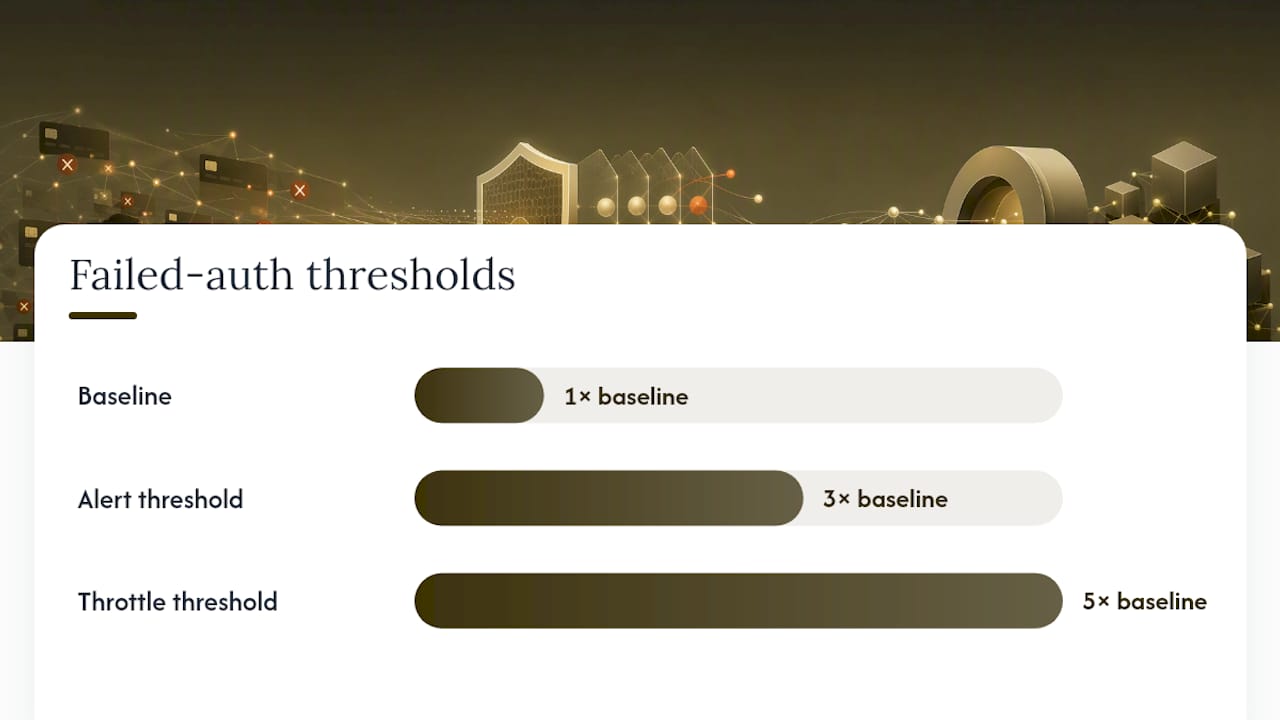
- A sudden increase in failed authorization ratios beyond three to five times the normal rate, combined with rapid, unique card submissions and spikes in guest checkouts, signals an active attack.
- These attacks incur high costs through authorization fees, potential chargebacks, customer support disruptions, and increased risk of account suspension or restrictions by processors.
- Defense strategies should prioritize tiered velocity rules, AVS and CVV enforcement, and layered friction like CAPTCHA and 3DS, gradually escalating based on threat signals.
- Merchants with high-risk profiles, such as subscription, digital goods, or regulated verticals, benefit from specialized payment partners that provide preconfigured fraud controls and underwriting support.
Table of Contents
- What Is Card Testing Fraud and How Does Carding Work?
- What Signals Indicate a Card Testing Attack in Progress?
- How Does Card Testing Fraud Cost Merchants Money?
- Which Prevention Controls Actually Stop Carding Attacks?
- What Should Merchants Do in the First 24 Hours of an Attack?
- Where Should You Place Fraud Detection Controls?
- Why Specialized Payment Partners Matter for High-Risk Merchants
- Which Merchants Face the Highest Card Testing Risk?
- What Legal and Compliance Rules Apply to Card Testing Fraud?
- What Do Real Card Testing Attacks Look Like?
- Fraud Controls Are a Balance, Not a Wall
- Get Fraud Controls Built Into Your Payment Setup From Day One
- Sources
- FAQ
What Is Card Testing Fraud and How Does Carding Work?
Card testing, often called carding or card enumeration, starts long before it ever hits your checkout page. Attackers buy or steal batches of card numbers, usually missing the CVV, expiration date, or both. Those gaps make the stolen data close to worthless on their own, so the next step is validation.
That’s where your store comes in. Fraudsters run scripts against checkout forms, cycling through possible CVV codes and expiration dates against a known card number until one combination clears. J.P. Morgan’s guidance on carding describes this as an automated process built to test large batches of stolen data quickly, using either $0 authorization holds or small charges under a dollar that rarely draw a cardholder’s attention.
The infrastructure behind these attacks has matured well past a single hacker running scripts from one laptop. You’re typically dealing with:
- Botnets distributing requests across thousands of IP addresses to dodge simple rate limits
- Residential proxy networks that make traffic look like it’s coming from real home internet connections
- Browser emulators that mimic legitimate shopping sessions, complete with mouse movement and page dwell time
- Human-assisted “click farms” for sites with strong bot defenses, where low-wage workers manually complete CAPTCHAs
Once a card validates, it gets sold on criminal marketplaces or used directly for larger fraudulent purchases, often on a different site than the one where it was tested. Your store absorbed the risk and the cost. Someone else gets the payout.
What Signals Indicate a Card Testing Attack in Progress?
Card testing rarely announces itself with one obvious red flag. It shows up as a pattern across several metrics at once, and catching it early depends on watching the right combination.
Three signals matter most:
- Failed authorization ratio. A jump to three to five times your normal decline rate is the clearest early warning, and it’s the threshold J.P. Morgan recommends building alerts around.
- Unique cards per minute. Legitimate shoppers don’t submit a new card number every few seconds from the same session or device.
- Guest checkout share. A sudden spike in guest transactions, especially paired with rising declines, often means bots are avoiding the friction of account creation.
Device and IP clustering adds another layer. When dozens of transaction attempts trace back to the same device fingerprint or a narrow IP range, that’s rarely coincidence. Repeated small-dollar charges and rapid retries of CVV or expiration combinations against a single card number round out the pattern.
Pro Tip: Set alert logic in tiers rather than a single trigger. One fraud detection guide suggests notifying your team at 3x baseline failed authorizations and automatically throttling at 5x baseline, which keeps you from either drowning in false alarms or missing the attack until it’s over.
You’ll find these signals in your gateway’s authorization logs, your order analytics dashboard, and session-level logs from your checkout platform. Combining all three data sources cuts down on false positives, since a single spiky metric might just be a flash sale, but three moving together rarely is.
How Does Card Testing Fraud Cost Merchants Money?
Every authorization attempt, successful or not, generates a fee from your gateway or acquirer. A card testing attack running thousands of attempts in an hour can rack up authorization charges before a single item ships.
The damage doesn’t stop at fees:
- Processing costs multiply fast. Micro-authorizations that would normally cost fractions of a cent add up quickly at bot scale.
- Chargebacks follow successful hits. Once a fraudster confirms a live card, they or a buyer downstream use it for a real purchase, and the cardholder disputes it later.
- Support tickets pile up. Confused customers who see strange $0 or $1 charges on their statements will call or email, adding load your team didn’t budget for.
- Processors take notice. PayPal’s guidance on carding attacks warns that unchecked card testing can trigger monitoring program placement, higher reserves, or processing restrictions.
That last point is the one merchants underestimate most. A carding attack that never results in a single successful fraudulent sale can still get your account flagged for elevated risk.
Which Prevention Controls Actually Stop Carding Attacks?
The right defense layers friction so bots hit resistance while real customers barely notice anything changed. Mastercard’s guidance on merchant response frames this as progressive friction: escalate checks only when signals justify it, rather than locking down checkout for everyone.
Start with velocity rules. Rate limits tied to IP address, device fingerprint, email domain, and billing address catch the volume that makes card testing profitable for attackers. Tune these against your own traffic baseline first. A rule set copied from another merchant’s playbook will either miss real attacks or block your best customers during a holiday rush.
AVS and CVV enforcement remain foundational. Requiring an address match and a correct CVV code eliminates a large share of low-effort testing attempts. The trade-off shows up with international orders, since Address Verification System matching works unevenly outside the United States and can decline legitimate overseas customers. Many merchants run stricter AVS domestically and lean more on device signals and 3DS for cross-border transactions instead.
Beyond those basics, layer in:
- 3D Secure (3DS) for new accounts and guest checkouts, which shifts liability and adds a step attackers’ scripts often can’t clear
- CAPTCHA and honeypot fields that filter out basic bots without slowing down human shoppers
- Device fingerprinting and behavioral analytics to catch the browser emulators that CAPTCHA alone misses
The sequence matters as much as the tools themselves. Throttle first, escalate to CAPTCHA if the pattern continues, and reserve 3DS for sessions that still look suspicious after that. Ripping out guest checkout entirely is a blunt overreaction that tends to hurt conversion more than it stops fraud. Save that step for when everything else has already failed.
What Should Merchants Do in the First 24 Hours of an Attack?
Speed matters more than perfection once you’ve confirmed a card testing attack. The playbook breaks into three phases.
In the first few minutes, contain the flood:
- Enable throttles and rate limits at the gateway level before the traffic reaches your processor.
- Add or tighten CAPTCHA on the checkout and login flows the attack is hitting.
- Block the specific IP subnets or device fingerprints generating the bad traffic.
Within the next few hours, add friction that’s harder for bots to fake:
- Force 3DS on any flow the attack touched, even for returning customers
- Require account sign-in instead of guest checkout temporarily, if the volume justifies it
- Notify your acquirer or processor directly. Stripe’s card testing guidance warns against naively retrying declined authorizations during an active attack, since that inflates both your fees and issuer suspicion toward your account.
After the immediate threat passes, the real work starts. Review authorization logs to understand exactly how the attack got as far as it did. Tune your velocity rules based on what you learned. Update your incident playbook so the next attack gets caught faster, and if customer card data may have been exposed anywhere in the chain, notify affected customers as your compliance obligations require.
Where Should You Place Fraud Detection Controls?
Card testing defenses work at three different layers, and where you place each control changes both its effectiveness and its cost in latency.
Client-side tools like device fingerprinting scripts and CAPTCHA widgets run in the shopper’s browser, catching bot behavior before a request even reaches your server. Server and gateway-side controls, including rate limits and tokenization, stop the bulk of automated traffic with minimal delay to legitimate checkouts. Processor-side defenses, like network-level filters and machine learning scoring, catch what slips through the first two layers.
Gateway-layer throttles tend to deliver the best return for the effort. They stop traffic before it burns through processor-level authorization fees, and they coordinate cleanly with frontend signals like device fingerprints feeding into the same rules engine. Vendor platforms such as SEON build real-time scoring specifically to work across both integration points.
Talk to your processor directly about enabling anti-carding filters on their end and sharing your telemetry with them. Coordinated defense across merchant and processor catches patterns neither side sees alone.
Why Specialized Payment Partners Matter for High-Risk Merchants
Specialized payment providers often work specifically with high-risk and complex ecommerce businesses, including nutraceutical brands, telehealth companies, and subscription merchants, where card testing risk runs higher than average and where a generic processor’s fraud tools often fall short. That specialization means understanding both the technical attack patterns above and the underwriting relationships that keep an account stable when volume spikes unexpectedly.
Peter has spent his career studying payment fraud patterns across high-risk verticals, with a focus on how attacker behavior maps to the operational signals merchants can actually monitor and act on. His analysis in this piece reflects that grounding in gateway-level detection and layered control design.
Merchants working with specialized acquiring and gateway partners get access to fraud prevention configuration, chargeback mitigation support, and underwriting relationships built around volume patterns that would spook a generalist processor. That combination matters most for businesses in regulated or fast-growing categories, where a single unmanaged carding attack can trigger the exact processor restrictions covered earlier in this piece.
Which Merchants Face the Highest Card Testing Risk?
Card testing doesn’t target every ecommerce store equally. Attackers gravitate toward sites where a validated card is worth the effort and where defenses are historically weak.
Subscription and recurring billing merchants sit high on that list, since a validated card gives an attacker a card that will get charged repeatedly without further testing. Digital goods and gift card sellers are attractive too, because fraudulent orders convert to cash or resellable inventory instantly, with no shipping delay to catch. Nutraceutical, supplement, and telehealth merchants see elevated testing activity as well, partly because these verticals often run smaller average order values, which lets attackers use low-dollar test amounts that blend into normal traffic.
Timing follows predictable patterns. Attacks cluster around peak shopping seasons, when transaction volume is already high and a spike in declines is easier to miss against the noise. Post-deployment windows carry their own risk. Any time your team pushes a checkout update, migrates gateways, or launches a new payment method, attackers test whether the new configuration reopened gaps the old one had closed. New merchant accounts see disproportionate testing activity too, since a fresh account with unproven fraud controls is a soft target compared to a store that’s already tuned its defenses. If your business fits any of these profiles, the monitoring thresholds covered earlier deserve tighter attention than a generic ecommerce baseline would suggest.
What Legal and Compliance Rules Apply to Card Testing Fraud?
PCI DSS compliance sits at the center of your legal exposure around card testing. The standard requires merchants to maintain secure systems, monitor and log access to cardholder data, and implement strong access control measures, all of which directly reduce the attack surface card testing exploits. A merchant that hasn’t kept up with current PCI DSS requirements faces steeper liability if a testing attack escalates into an actual data breach.
Correct merchant category code classification matters here too, since processors and card networks use your MCC to calibrate risk scoring and monitoring thresholds. A merchant category code that doesn’t match your actual business activity can either trigger unnecessary scrutiny or leave you under-monitored for the risk your vertical actually carries. High-risk verticals in particular should confirm their MCC is accurate rather than inherited from a generic setup.
Reporting obligations vary by jurisdiction and by the nature of the incident. If a card testing attack reveals that cardholder data was exposed somewhere in your systems, most states require notifying affected individuals within a defined window, and your processor agreement likely requires notifying them directly as well. Card network rules also allow processors to place merchants into fraud monitoring programs when decline rates or chargeback ratios cross defined thresholds, which functions as a compliance consequence even without a formal legal violation. Documenting your detection and response process, the exact playbook covered earlier in this piece, gives you a defensible record if a regulator, processor, or acquiring bank asks how you handled an incident.

What Do Real Card Testing Attacks Look Like?
Card testing attacks follow recognizable shapes once you’ve seen a few, even though specific merchant details rarely become public. Logs typically show hundreds of unique card numbers submitted from a narrow cluster of IP addresses, all using the same expired session token pattern, a signature of scripted rather than human traffic.
The mitigation in cases like this generally follows the same sequence: gateway-level rate limiting stops the immediate flood, CAPTCHA gets added to the guest checkout flow specifically, and 3DS gets forced on any transaction over a defined dollar threshold. Recovery from the fee exposure and processor scrutiny typically takes longer than stopping the attack itself, since a spike in declines can linger in a merchant’s risk profile with the acquirer for months afterward.
A second common scenario involves a newly launched digital goods site with no velocity controls configured at all. Attackers found the gap within days of launch and ran tens of thousands of low-dollar authorization attempts before anyone noticed the pattern in the analytics dashboard. The lesson merchants take from cases like this is consistent: fraud controls need to be live before launch, not added reactively once an attack has already run its course.
Fraud Controls Are a Balance, Not a Wall
The instinct after a card testing attack is to lock everything down. Require accounts for every purchase, tighten AVS to the point of blocking half your legitimate international orders, force 3DS on every transaction regardless of risk level. That instinct is understandable and almost always wrong.
Blunt blocks punish real customers as much as they stop attackers, and the smarter fraudsters route around static rules within days anyway. Layered, measurable changes work better because you can see exactly which control caught what, and you can dial friction up or down based on actual signal rather than fear.
Start with monitoring and the lowest-friction controls: velocity limits, AVS, CVV enforcement. Scale up to CAPTCHA and 3DS only where your data shows the risk justifies it. And keep a post-incident playbook you actually revisit, not one written once after a bad week and forgotten. Fraud tactics evolve, and your rules need quarterly reviews, not a one-time setup.
— Peter
Get Fraud Controls Built Into Your Payment Setup From Day One
Configuring your own layered defenses is doable, but high-risk and fast-growing merchants often need more than checkout tools. Specialized payment providers can offer alternatives to generic payment setups for merchants in nutraceuticals, telehealth, supplements, and other regulated verticals, pairing fraud prevention configuration with acquiring relationships and underwriting support built for this risk profile.

That means AVS and CVV enforcement, velocity rules, and chargeback mitigation can be built into your merchant account setup instead of bolted on after your first attack. Specialized payment providers often work with domestic and international acquiring partners suited to complex merchant placement, so a card testing spike doesn’t automatically put your account at risk of frozen funds or surprise reserves. Telehealth companies can review the telehealth payment processing page for vertical-specific handling, while nutraceutical and supplement brands can check nutraceuticals payment processing and supplements payment processing for details relevant to their category.
If your current setup left you exposed during a recent attack, or you’re launching a new store and want fraud controls configured before you go live, apply now to talk with the Davincipay team about your account.
This article is general information, not a substitute for advice from a qualified financial advisor. Consult a qualified financial professional about your own circumstances before acting on anything here.
Sources
- Preventing card testing attacks
- Card testing fraud explained: How merchants can respond — Mastercard
- Stripe: Card testing guidance
- Protect your business against carding attacks — PayPal Braintree
FAQ
Is Tapping Your Card Safer Than Inserting It?
Contactless tap transactions use encrypted, one-time transaction codes similar to chip technology, making them comparably secure to inserting your card and generally safer than swiping a magnetic stripe.
How Did Someone Use My Card Without Having It?
Your card number, expiration date, and CVV can be stolen through data breaches, phishing, skimming devices, or malware, then validated through card testing attacks like the ones described above before being used for unauthorized purchases.
Can My Debit Card Be Scanned While in Your Wallet?
Contactless cards can theoretically be read by an unauthorized scanner at very close range, though real-world skimming this way is rare compared to data breaches and online card testing as sources of stolen card data; a wallet with basic shielding largely eliminates the risk.
Can You Go to Jail for Lying About Credit Card Fraud?
Falsely reporting a fraudulent charge that you actually authorized is a form of fraud itself and can carry criminal penalties depending on the jurisdiction and amount involved, separate from the legitimate reporting obligations merchants have when they detect actual card testing activity.
What Is the Fastest Way to Stop an Active Card Testing Attack?
Enable gateway-level rate limits and CAPTCHA immediately, since these stop the bulk of automated traffic within minutes, then escalate to forced 3DS on affected checkout flows if the attack continues.


.webp)
